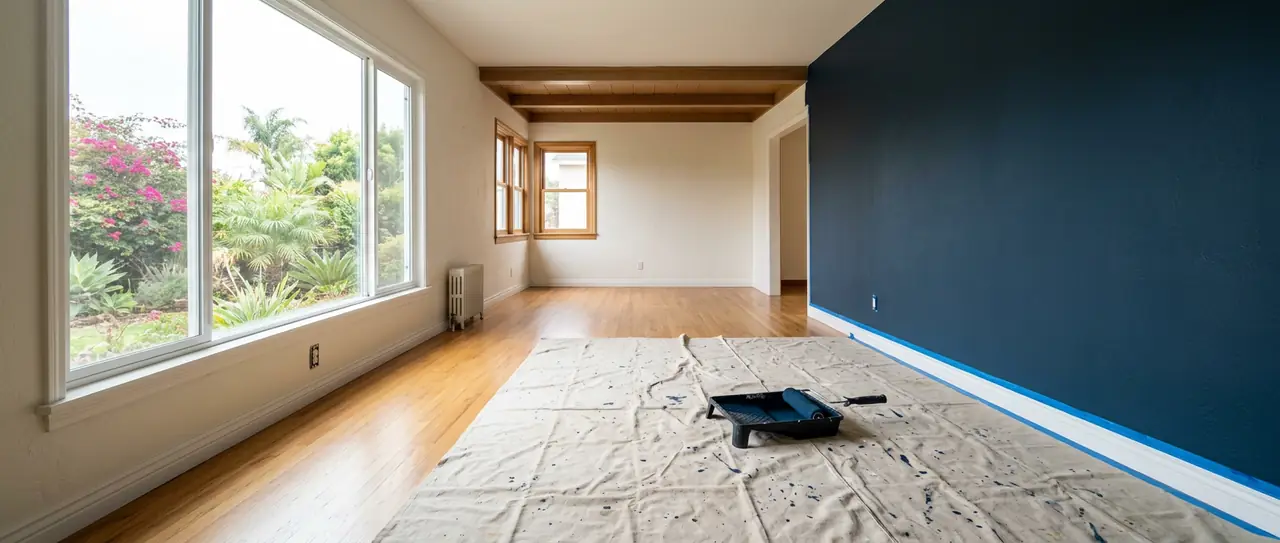
A showroom-quality interior finish is won before the first coat goes on. Here is the preparation sequence we follow on every San Fernando Valley home.
Paint hides nothing
Fresh paint is a thin film. It follows every ridge, nail pop and hairline crack underneath it, and gloss makes those flaws more obvious, not less. In the San Fernando Valley, seasonal temperature swings and normal structural settling open small sheetrock cracks and pop fasteners loose almost every year.
That is why we budget more crew hours for preparation than for rolling. The finish you see in a photo is the direct result of what happened to the wall the day before.
The sequence we follow
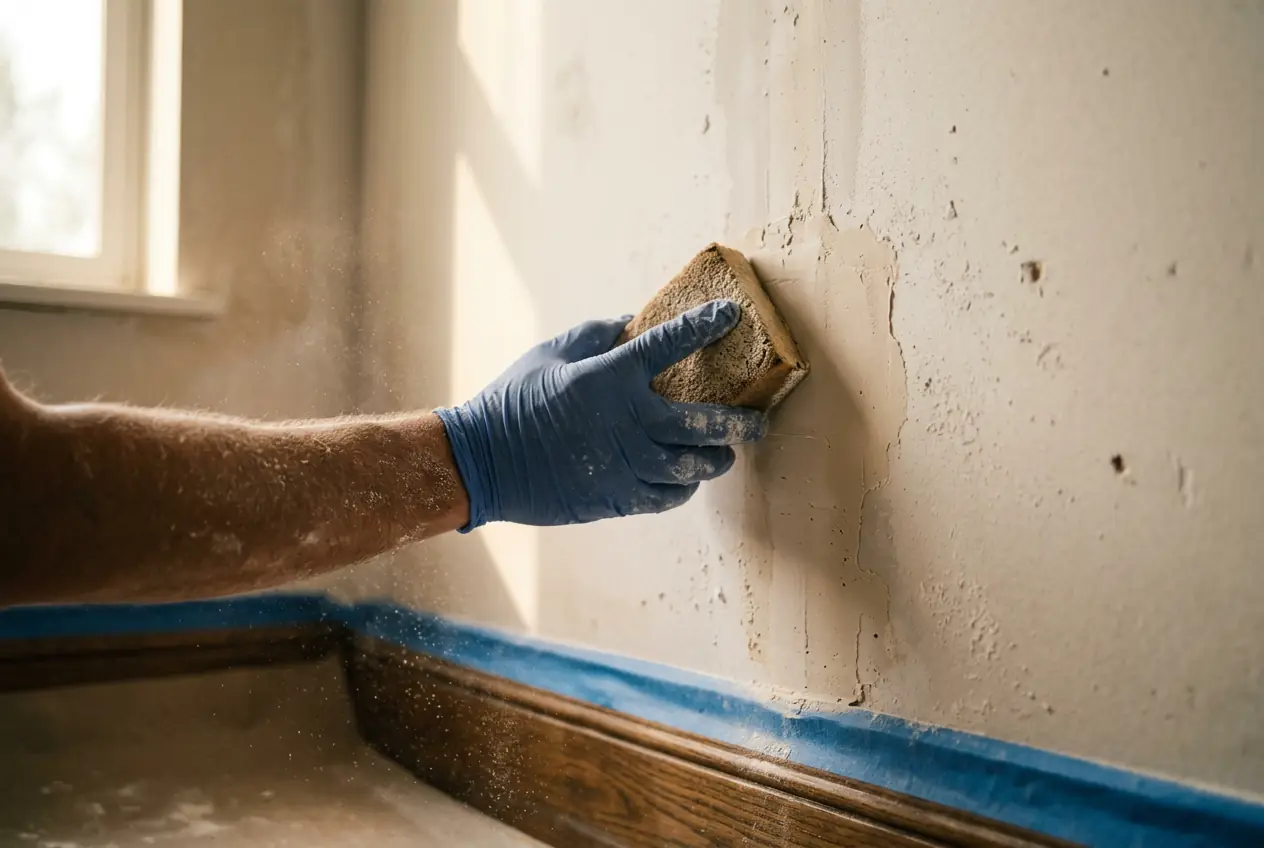
First we wash surfaces to remove cooking oils, hand grease and dust, because coatings will not bond to a contaminated wall. Next we fill holes and cracks with joint compound, feather the edges wide, and sand the repair flat so it disappears under a raking light.
Then we spot-prime every repair with a high-adhesion primer to equalize porosity, so the topcoat dries to one uniform sheen instead of flashing dull patches over the patches.
What good prep buys you
Correctly prepared walls resist peeling, blistering and cracking for years longer, which means fewer repaints and lower lifetime cost. It also protects trim, floors and furniture, because a crew that masks properly is a crew that cleans up properly.
Want this done right the first time?
Julian Caderon will walk your project and give you clear, line-item pricing at no cost.
Keep Reading
 Protecting Exterior Stucco & Wood Siding in Southern California
 Choosing Interior Colors That Still Look Right at Night