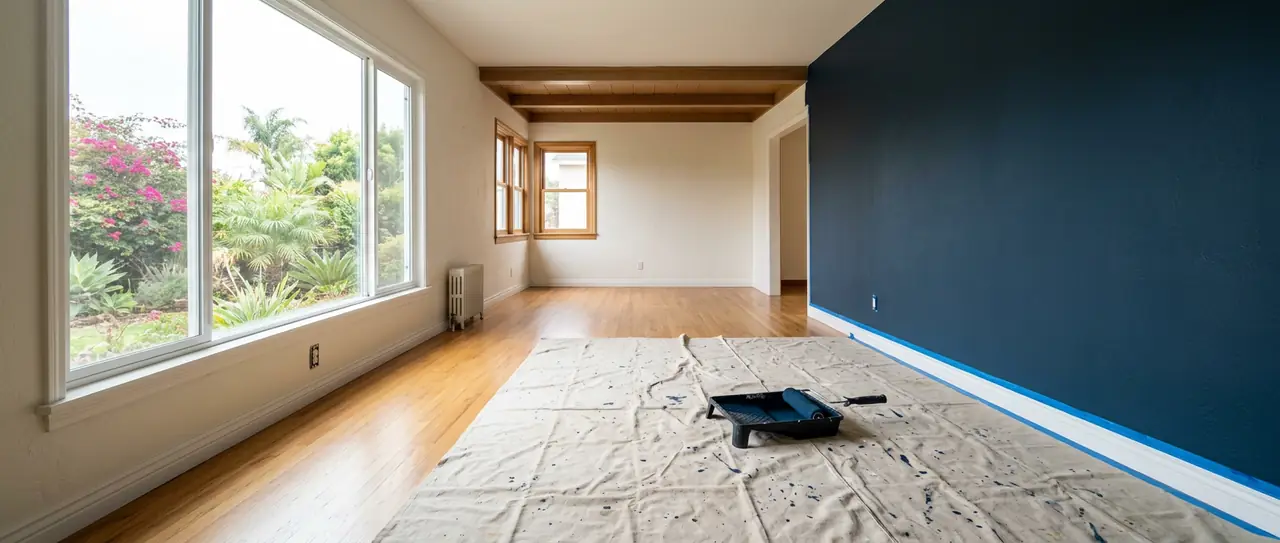
Cracks, water stains and texture mismatches each call for a different fix. Here is the judgment call we make on site — and how we blend a repair invisibly.
Repair is usually enough
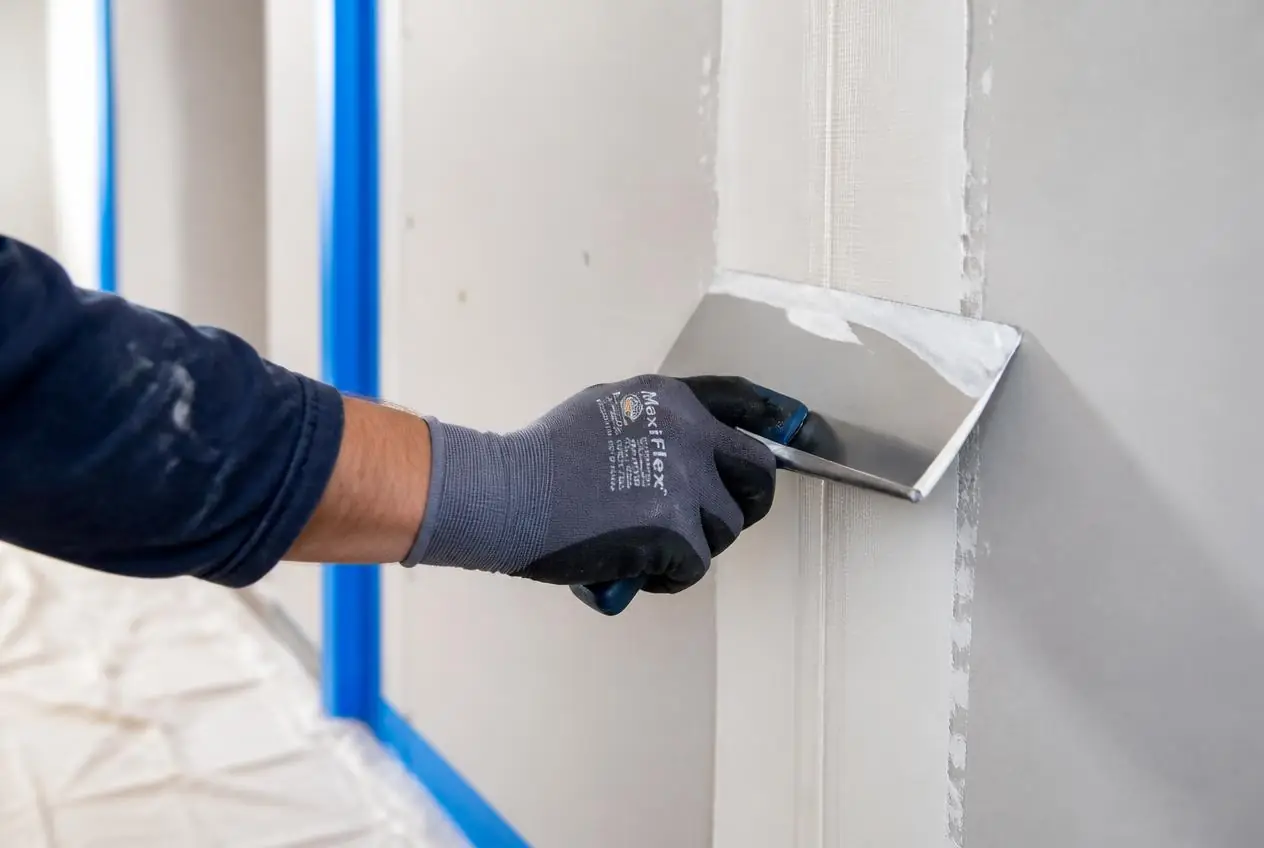
Hairline settlement cracks, nail pops, door-knob dents and small holes are cosmetic. We cut them out cleanly, tape, apply two or three coats of compound with progressively wider knives, then sand and blend.
When we replace instead
Board gets replaced when it has lost structural integrity: soft or crumbling drywall from a roof or plumbing leak, mold behind the paper, or a crack that keeps reopening because the framing is moving. Patching over those problems only postpones them.
Blending the texture is the real skill
Most visible patches fail on texture, not on compound. We match orange peel, knockdown, skip trowel and smooth level-5 finishes, feather the transition well beyond the repair, then prime the area so the topcoat dries even. Done right, you should not be able to point at where the repair was.
Want this done right the first time?
Julian Caderon will walk your project and give you clear, line-item pricing at no cost.
Keep Reading
 Why Surface Prep Decides Your Interior Paint Job
 Protecting Exterior Stucco & Wood Siding in Southern California